

更新 1 月 以前に
堆肥化可能なコーヒーパッケージ: パック全体を監査する, 映画だけじゃない

ypak.coffee(イパク・コーヒー)
YPAKパッケージンググループは 2011 そして 3 香港に拠点を置く企業, 東莞と佛山. 私たちは中国最大級のコーヒーバッグメーカーの一つになりました. 私たちはスイス製の最高品質のWIPFバルブを使用して、コーヒーを新鮮に保ちます.
多くの国で課されているプラスチック禁止政策に適合すること, 持続可能な包装袋の研究と開発を行ってきました, リサイクル可能・堆肥化可能なポーチなど.
最低量はない, HP 25K INDIGOデジタルプリントサービスではカラープレートは不要です.
YPAKへの訪問は歓迎します.
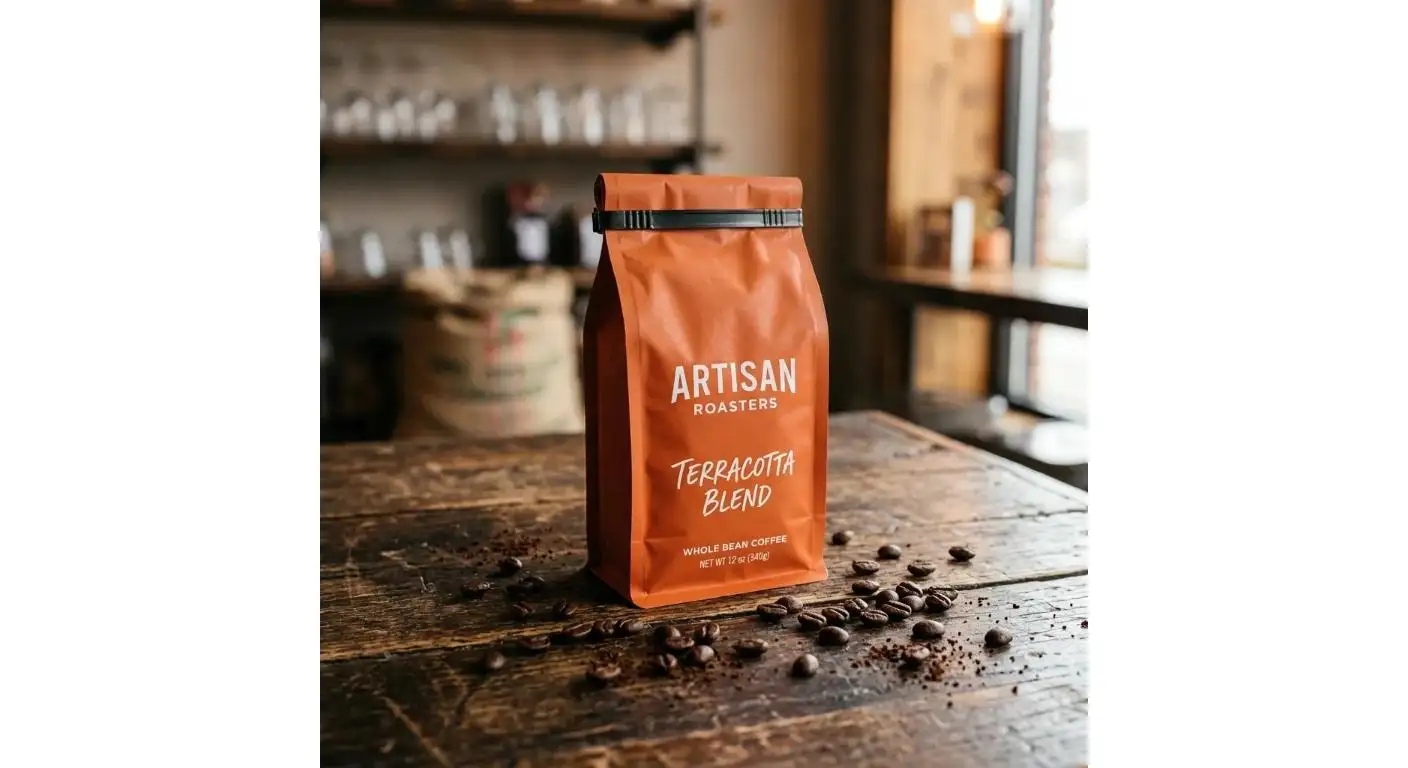
堆肥化可能なコーヒー包装
コーヒーバッグは堆肥化可能かもしれません, しかし、それが必ずしも消費者が重要な問いに答えを持っていることを意味しません:
What about all of the things that are attached to it?
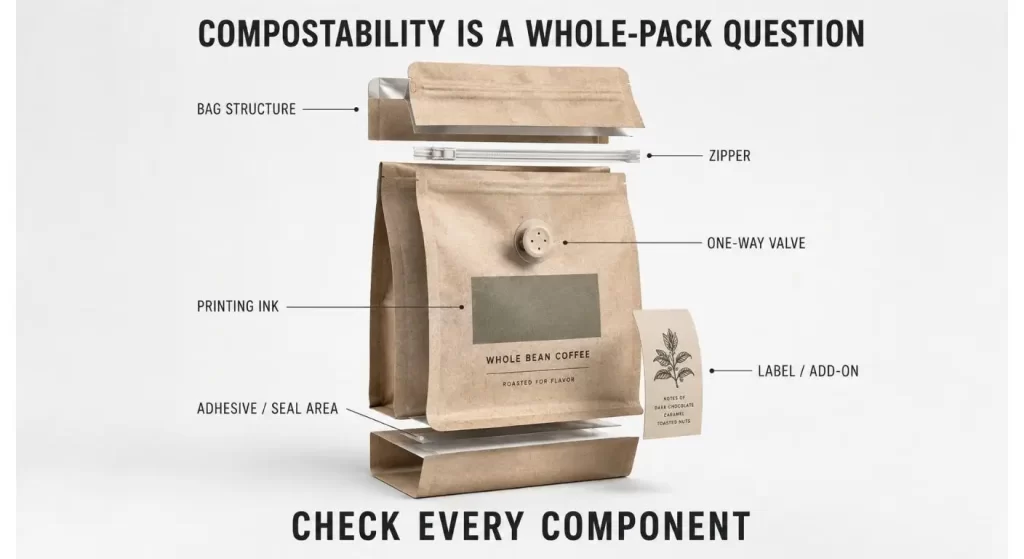
There's the zipper. The valve. 印刷. 接着剤. ラベル. Occasionally with a window and/or specialty finish.
Here's why you should not just ask what the primary film material in your coffee packaging is, when it comes to finding compostable packaging.
But for roasters and private label, the challenge is to ensure that the whole package backs up the front-of-pack statement.
What is Compostable? A Package Question.
Single sheets of material are not the typical flexible coffee packaging materials.
It contains various parts that serve various functions. Body protection of the coffee. Reclosure is done via the zipper. The valve controls the gas emission from freshly roasted beans. Printing is the method of conveying the brand.
Buyers should thus make sure to review an option like a compostable flat bottom coffee bag, and not just the front, which is made of kraft paper.
No natural appearance is evidence.
The word “eco.” is not used either.
The specification needs to describe what the final package will be.
Freshness is still before the Sustainability Story.
The brand's environmental goals don't make it easier to package coffee.
アロマプロテクション, moisture and oxygen protection is still important.
This provides the main hurdle: come up with a structure that will allow for the planned route of end-of-life, while at the same time performing the primary function which is to keep roasted coffee safe.
The distinction between an environmental claim and actual packaging performance is useful, and is the same one YPAK makes in their discussion of 生分解性コーヒービーンズバッグ.
In terms of buying, the only pragmatic thing is:
Test simultaneously for sustainability and product protection.
A bag that gets the coffee into the desired waste stream, but results in coffee spoiling too soon has not solved the problem.
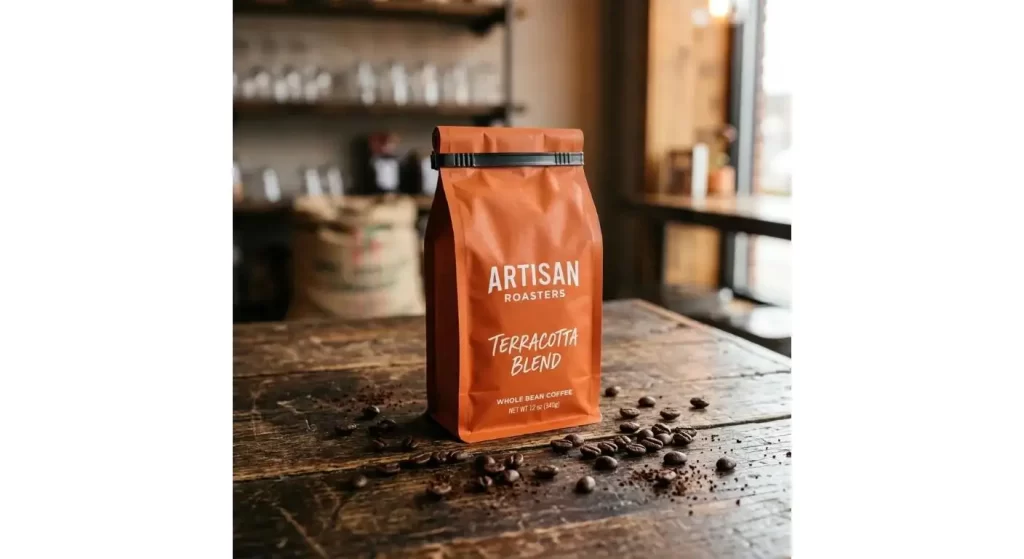
I have a few questions for the Valve and Zipper
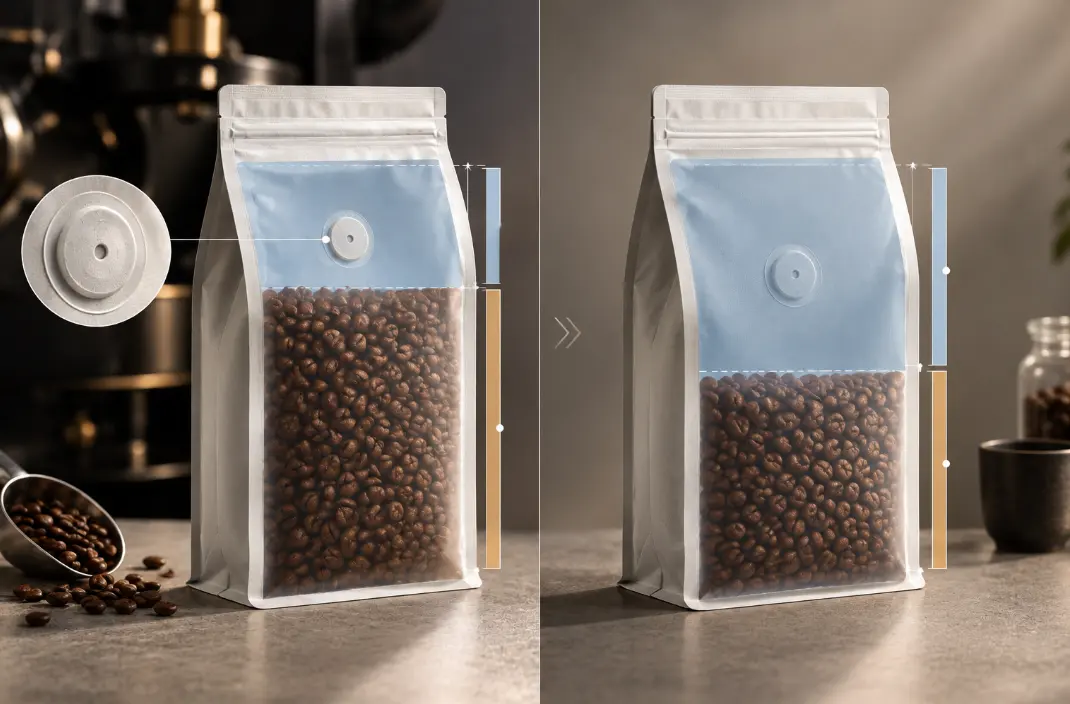
Coffee that's been freshly roasted may require a degassing valve.
They can also anticipate to discover a zipper that can be re-sealed.
Both features are small in comparison to the body of the bag itself, and are thus easily forgotten when early sustainability discussions are held.
Please don't ignore them.
Question if the valve and closure has been taken into account in the planned packaging process. YPAK's guide to eco-friendly coffee bags with one-way exhaust valves is helpful background as it places the valve in-between the freshness requirements and sustainable packaging design.
A little bit can make the entire bag.
Industrial Compostable and Home Compostable are not interchangeable words
“Compostable” needs context.
It is important to distinguish between a package developed for a composting environment for industry and one developed around home composting and not present them to customers as if they are the same.
It is especially crucial for brands that are selling brand products in different markets.
Determine what the disposal message should be for the customer before approval of the artwork and if it is a material match for the packaging and destination market.
Avoid first trying to identify a material to support the strongest green claim and then writing that claim.
Packaging route is the first choice.
Add the claim at the end.
The printing industry can do its part to help keep the environment healthy.
The typical packaging development process is:
Approve the material.
Then do something to make it sound exciting.
The second step can bring inks, コーティング, 接着剤, labels and decorative finishes that weren't originally a part of the sustainability conversation.
But approval of artwork should go beyond Pantone colours and position of the logo.
If sustainability is an integral part of the product, a quick packaging review should be conducted where the design of a significant change is made.
同様に, when creating a bigger coffee packaging solution, バッグ, secondary packs and branding messages should not contradict each other, or make opposing environmental statements.
Try to create one verified structure, then build 10 SKU.
Roasters like variety.
Repeatability is the preferred choice for packaging departments as a whole.
They don't necessarily require three material structures, although a single-origin Ethiopia, seasonal espresso and decaf line can all require different artwork.
After testing a suitable platform, controlled graphic areas that change, but the bag structure remains stable, may allow for easier management of future SKUs.
This cuts down on packaging variables each time a new coffee comes to market.
The seasonality can manifest itself on the surface as creativity.
The guaranteed structure below does not require the reset to start with.
Consider Every Packaging Change as a mini re-approval!
One person desires to have another zipper.
There is another SKU that requires an increased size.
The metallic detail is added by marketing.
Buying means buying one component supplier.
These decisions, taken on a case-by-case basis, might sound insignificant.
As a group, they can work to take the completed package farther from the version they initially reviewed.
Develop a simple guideline whenever there is material, バルブ, ジッパー, adhesive or printing system and/or a significant finish change, ask yourself if the environmental claim still applies.
That's the whole thing about that discipline, it's cheaper than finding out the problem after thousands of bags have been printed.
| Packaging Change | Re-Check Before Approval | Main Risk |
| バッグサイズ | Structure and finished specification | Old approval may not cover new format |
| バルブ | Component compatibility | Different component from approved pack |
| ジッパー | Closure material / 建設 | Changes complete package structure |
| 印刷 | Ink and printing system | Claim may relate to another specification |
| スペシャルフィニッシュ | コーティング / 接着剤 / added layer | Adds material to the finished pack |
| Label | Label and adhesive | Creates an additional disposal component |
Request Evidence Before Requesting Green Artwork
A valuable supplier discussion should lead to more than a flipchart of ‘sustainability' information.
Buyers must be aware of the content construction, planned composting trajectory, component information and final specification that the documentation applies to.
と custom coffee packaging builder, do not think of material, 構造, finish and add-ons as menu items.As you prepare a project using a custom coffee packaging builder, think of material, 構造, finish and add-ons as related decisions – not independent ones.
Then pass the final copy of the wording to the marketing team.
The other way around!
| RFQ Item | Information to Confirm |
| Coffee Type | Whole bean or ground coffee |
| Pack Size | Required fill weight |
| バッグ形式 | フラットボトム, stand-up or other |
| Composting Route | Industrial or home composting requirement |
| 閉鎖 | ジッパー / non-resealable |
| バルブ | 必須 / not required |
| 印刷 | Artwork count and print requirements |
| ドキュメント | Evidence covering the finished specification |
結論
Good compostable coffee packaging is not a material that looks greener and is just a film that can be composted.
The entire bag needs to be coherent.
All the components of the packaging, such as protection, structure of the film, バルブ, 印刷, accessories and communication of disposal have to align with the same packaging strategy.
So the more pertinent procurement question isn't:
Question from them: “Is this film compostable?
そうです:
“Do we have any evidence to back up the assertion that we are making about this finished coffee product?”
That's more difficult.
It's much more efficient also.
よくある質問
Q1. What is coffee packaging that can be composted?
Coffee packaging that is suitable to be composted under a specified set of conditions. Buyers should consider the final pack and its elements, rather than the film.
第2四半期. Do you think it is possible to put a valve on compostable coffee bags that lets air out?
Valves may be used within coffee bags, but not as an independent design element, but as part of the overall sustainability specification.
Q3. Can home composted be industrial composted?
いいえ. They refer to the various composting environments and cannot be substituted in packaging communications.
Q4. Is there any way to customize the coffee packaging so that it can be composted?
はい, but when assessing the finished packaging, the specification should also include inks, コーティング, adhesives and finishes and the environmental claims should be assessed.
Q5. What's a roaster to ask for before buying compostable coffee bags?
Ask for the complete makeup of material, specifics on the components, plans for composting, supporting paperwork and a completed sample of the material being ordered.
脚本
ypak.coffee(イパク・コーヒー)
イパク
YPAKパッケージンググループは 2011 そして 3 香港に拠点を置く企業, 東莞と佛山. 私たちは中国最大級のコーヒーバッグメーカーの一つになりました. 私たちはスイス製の最高品質のWIPFバルブを使用して、コーヒーを新鮮に保ちます.
多くの国で課されているプラスチック禁止政策に適合すること, 持続可能な包装袋の研究と開発を行ってきました, リサイクル可能・堆肥化可能なポーチなど.
最低量はない, HP 25K INDIGOデジタルプリントサービスではカラープレートは不要です.
YPAKへの訪問は歓迎します.